



Global Refit Market Keeps Expanding: New Transformation Ideas for Auto-Parts Retailers


The global automotive refit market is enjoying sustained growth. Refit-related demand keeps rising across major markets including North America, Western Europe and Southeast Asia. In particular, interior-upgrade projects for premium commercial vans and luxury SUVs register the sharpest growth. Statistics show the global automotive interior-refit market has exceeded USD 100 billion, maintaining an annual growth rate above 15%.
As the world’s largest automotive market, China’s refit industry started relatively late yet delivers faster expansion. Importantly, products and business models proven by overseas markets are rapidly being adopted domestically. Original manufacturers that meet international quality benchmarks and possess global supply capacity have become preferred partners for local refit shops.
This sends a meaningful signal for traditional auto-parts retailers.

Global Market: A Definite Growth Story
The worldwide automotive refit industry stays on an expansion track. The global refit market reached approximately USD 7.4 billion in 2025, projected to hit USD 8.1 billion in 2026 and USD 19.7 billion by 2035, with a compound annual growth rate of 10.3%. Another dataset values the global refit market at USD 95 billion in 2024, forecast to rise to USD 147.38 billion by 2033.
China ranks among the fastest-growing regional markets. China’s domestic refit market has surpassed CNY 160 billion, achieving 23.5% year-on-year growth in Q1 2026, outpacing the overall automotive aftermarket. Industry institutions predict China’s refit market may exceed CNY 250 billion with a 15.8% compound annual growth rate.
Nevertheless, China’s refit penetration rate remains below 5%, compared with 55% in mature markets across Europe and North America. This ten-fold gap represents enormous upside potential. According to the China Automobile Dealers Association, market size may reach CNY 300 billion within one to two years following new regulatory updates, with a long-term trillion-CNY prospect.

Dilemmas & Opportunities for Auto-Parts Retailers
Traditional auto-parts stores face mounting pressure: slowing new-vehicle sales, shrinking margins for repair-and-maintenance services, and price disruption from e-commerce. The industry sees stark divergence: some players thrive while others suffer heavy losses.
Challenges bring opportunities. 2025 industry data identifies five types of stores with natural advantages for moving into refit services: community-based stores with solid local foot traffic and younger customer bases, workshops with high-end vehicle repair expertise, multi-store chains with shared-supply-chain resources, and auto-detailing shops with strong aesthetic awareness. Many auto-parts retailers are hunting new growth drivers, yet struggle to identify suitable directions and practical implementation paths.
For instance, one auto-detailing shop owned by Zhang Mingci achieved solid business results after shifting to commercial-van refitting, offering aviation-grade seats and premium flooring. A community repair shop in Shanghai lifted refit business revenue share from 12% to 38%. These real-world cases prove that moving into refitting is not cross-industry diversification, but business upgrading.
A key transformation direction is shifting from selling discrete spare parts to delivering complete solutions.
Customers purchase components to solve specific problems and achieve desired vehicle outcomes. When retailers upgrade from pure parts sales to integrated “parts + custom solution + professional installation” services, customers demonstrate higher willingness to pay, and profit margins expand significantly. Interior refitting represents an ideal entry point.
Interior Refitting: A Viable New Path for Auto-Parts Retailers
Strong and fast-growing market demand: High-end vehicle owners show robust appetite for interior upgrades, supporting high average order values and healthy profit margins.
High business relevance: It belongs to the same automotive aftermarket ecosystem, overlapping customer groups keep transformation costs low.
Proven ready-to-deploy products and business models: No need to build everything from scratch.
Transformation cannot happen overnight. Product portfolios, technical competence, solution design and execution capabilities all constitute substantial barriers. For auto-parts retailers, the most pragmatic approach is not self-development from zero, but deep-level cooperation with an established original-equipment manufacturer. Retailers can leverage the factory’s mature products, technical resources and brand framework to accelerate market entry

Core Barrier to Transformation: Supply-Chain Competence
Traditional auto-parts supply chains focus mostly on repair-oriented spare parts. Refit projects require completely different product lines such as aviation-grade seats, interior trim kits and premium floor systems, with stricter quality requirements and higher customisation demands.
RELY AUTO specialises in interior-and-exterior upgrades for premium commercial vehicles and luxury SUVs, delivering complete supply-chain solutions for transitioning retailers:
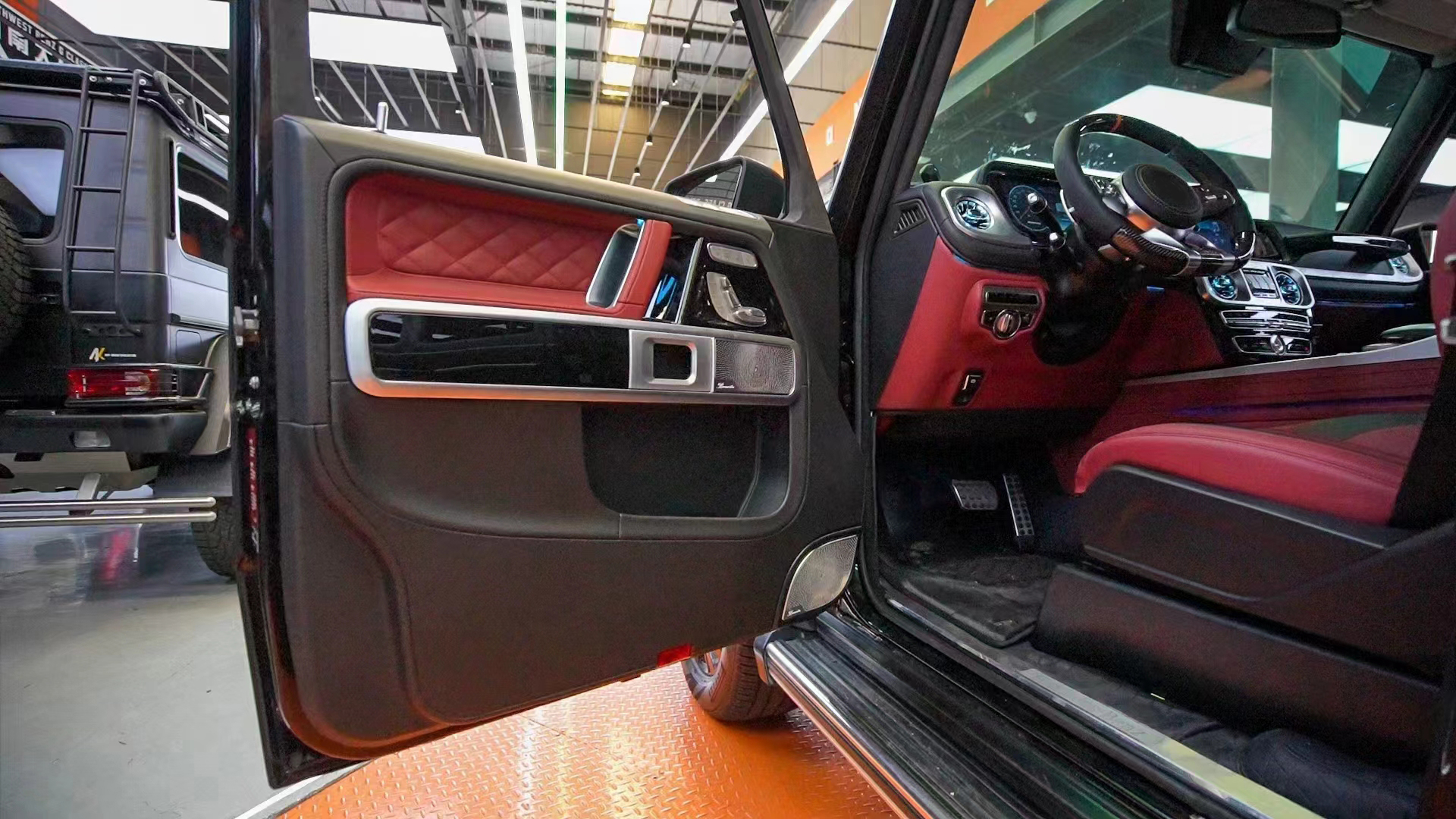
1:1 high-precision mould development to OEM-grade fitment standards. Covering G-Class, BMW, V-Class and Sprinter platforms. Every product is engineered from original-vehicle 3D scan data for precise matching and non-destructive installation, eliminating concerns over poor fitment or misalignment.
Full-range product portfolio for one-stop fulfilment. Aviation-grade seats (10-way electric adjustment, ventilation, heating, massage, electric leg rest; national 3C safety certified), upholstery kits, floor systems and functional accessories. Retailers can source everything via a single order without coordinating multiple vendors.
Comprehensive customisation capacity for premium requirements. Nappa leather, Alcantara suede, premium wood veneer and carbon-fiber materials. Colours, textures and stitching patterns are all configurable per client specifications.
Technical enablement and after-sales safeguards. Senior engineering teams deliver installation guidance and technical training, empowering partner stores to accept orders and reliably complete deliveries.
Global refit growth is undeniable, and China’s market boom is imminent. For auto-parts retailers, the question is no longer whether to enter refitting, but which partner to select and how to launch.
Shifting from parts retail to solution-oriented service represents an inevitable upgrading trend for auto-parts businesses. RELY AUTO’s full-range supply partnership supports smooth business transition, enabling retailers to tap into the high-growth, high-margin premium interior-refit segment and unlock new revenue streams.
Related News
-
 Apply these core screening standards to steer clear of 90 % of common startup pitfalls in this sector.
-
 With zero middlemen, we supply directly to modification workshops. Partner clients connect straight with our factory, skip multi-tier distribution markups and achieve higher profit per completed project.
-
 With basic workshop equipment and standardized sales scripts, your team can take on modification projects for these four vehicle lines, expand order sources and lift overall business revenue potential.
